
Can You Use Alternative Placement for Your FreeStyle Libre Sensor?
Living with diabetes means constantly looking for ways to make monitoring easier, more comfortable, and less intrusive. The FreeStyle Libre sensor has been a game-changer for many people with diabetes — offering a painless, needle-free way to track glucose levels around the clock. But one question keeps coming up in the diabetes community: can you wear your FreeStyle Libre somewhere other than the back of your upper arm?
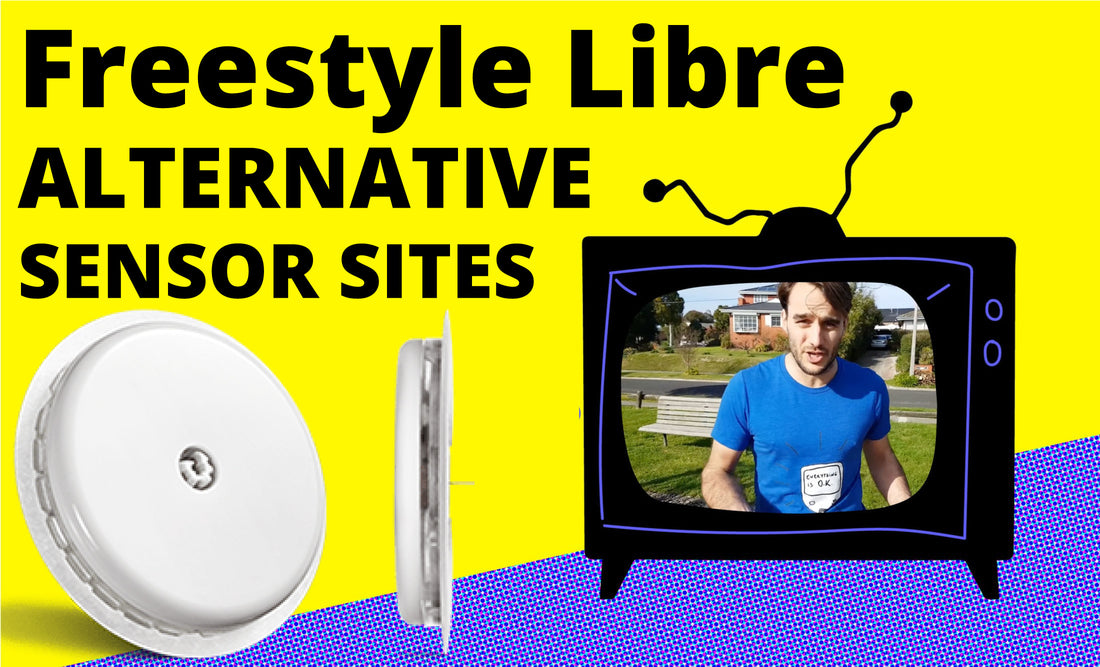
Our mate Jack from Australia (aka @jackabetic) decided to put this to the test, trying out several freestyle libre alternative sensor sites and documenting his experience in this brilliant video.
Common Freestyle Libre Alternative Sensor Sites
While Abbott officially recommends the back of the upper arm as the only approved placement site, many in the diabetes community have experimented with freestyle libre alternative placement options. Some of the most commonly tested locations include:
- Upper arm (back) — the officially approved site, and generally the most accurate
- Abdomen / stomach — popular among those used to injecting insulin here
- Thigh — a discreet option, especially under clothing
- Lower back / flank — works for some, though readings can lag
- Upper buttock — surprisingly comfortable for sleeping
Results can vary from person to person and site to site. Accuracy, adhesion, and comfort all play a role in deciding which freestyle libre sensor placement works best for you.
Things to Keep in Mind with Alternative Sensor Placement
Before you start experimenting with freestyle libre sensor alternative placement, here are a few things worth knowing:
- Off-label use: Alternative sites are not officially approved by Abbott. Results may differ from arm-based readings.
- Accuracy: The arm site has the most clinical data behind it. Alternative sites may show a slight lag or offset, especially during rapid glucose changes.
- Adhesion: Different body areas sweat and move differently. You may need extra adhesive patches to keep the sensor in place.
- Calibration: If you notice consistent discrepancies between your sensor and fingerstick readings, always trust the fingerstick for treatment decisions.
Why We Love This Video
Jack's video is funny, honest, and genuinely useful. He tests real-world scenarios that many of us have wondered about but never dared to try — all in the name of improving diabetes quality of life. That's exactly the spirit of the diabetes community we love being part of.
And we couldn't be prouder that Jack is wearing our Everything is O.K. tee throughout the video. A little reminder that no matter how many sensors you stick in unusual places, everything is, in fact, O.K. 😄
Cheers, Jack! 🙌