

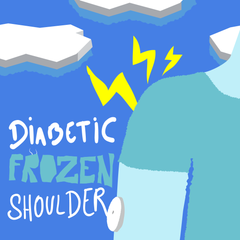
I’ve been living with a painful shoulder for almost a year now. Recently, I was diagnosed with ‘diabetic frozen shoulder’ — something I had never heard about before. Well, apparently, it’s a big thing in the diabetes community.
My diagnosis triggered some research on my side. I shared it widely on social media and got an overwhelming response within the diabetes online community. I found people who’d had frozen shoulder in both shoulders. Also cases of misdiagnosis — please check that what you actually have is not a torn rotator cuff, as symptoms can be similar in the early stages.
With that in mind, I decided to post here some of the answers I’ve found for treating or living with a frozen shoulder. I hope it’s useful for other people with diabetes going through this extremely uncomfortable and long process of healing.
Please bear in mind I have lived with type 1 diabetes for 25 years but I am not a doctor. Do your own research and check your sources. References are at the end of this post.
A quick tip: pay attention to your posture at work and your sleeping position.
What is diabetic frozen shoulder? What causes it?
People living with diabetes are at an increased risk of developing adhesive capsulitis — commonly known as frozen shoulder. Blood sugar levels that are difficult to manage over time can affect collagen, which is a major protein that makes up our connective tissue. The shoulder joint capsule thickens and tightens, restricting movement and causing significant pain.
It’s worth saying clearly: frozen shoulder is not a sign of personal failure or poor self-care. It’s a complication that can develop in people living with diabetes regardless of how hard they work to manage their condition. The link between diabetes and frozen shoulder is physiological, not behavioural.
What are the 3 stages of frozen shoulder?
Frozen shoulder typically develops in three stages, each lasting an unpredictable number of months.
Freezing stage. The painful one. Any movement of your shoulder causes pain, and your range of motion starts to become limited. At its worst, you may struggle to dress yourself independently.
Frozen stage. Pain may begin to diminish during this stage, but your shoulder becomes stiffer and using it becomes more difficult. Simple things — like combing your hair — become genuinely hard.
Thawing stage. The range of motion in your shoulder begins to improve. This is the stage you’re working toward. Start gently rebuilding the muscles you’ve lost. Pain tends to worsen at night throughout the process, disrupting sleep significantly.
A useful video on the link between diabetes and frozen shoulder
How long does frozen shoulder take to heal?
Everyone will tell you something different, and that’s frustrating but honest. The process can take anywhere from a few months to three years. I was in my 11th month at the time of writing and things were not improving as quickly as I would have liked. Patience is genuinely part of the treatment.
What helps? What I’ve tried.
Things I’ve tried personally:
- Acupuncture — I go regularly and it helps a lot with the pain
- Chinese cupping — great for temporary pain relief
- Ice packs — helpful for sleeping but only temporary
- Physiotherapy — didn’t work well for me personally
- Cortisone injections — effective for some people, but cortisone plays havoc with blood sugar levels. I had to adjust my basal rate significantly for several days afterwards. Be aware that cortisone is not effective for everyone.
Things other people living with diabetes have recommended:
- Shoulder manipulation under local anaesthetic, followed by daily stretching exercises over several months
- Deep tissue massage
- Saline injection — a distension procedure that some people find offers relief for several months, and may be an alternative for those who can’t tolerate cortisone
- Surgery — typically a last resort, but an option when other approaches haven’t worked
The mental health side — and why it matters
Frozen shoulder on its own is painful, limiting and slow to resolve. When you’re also managing diabetes — a 24/7 condition that already demands significant physical and emotional resources — adding a long-term, painful complication on top can genuinely affect your mental health.
Disrupted sleep from night pain affects blood sugar levels, which affects mood, which affects your capacity to manage everything else. The loss of independence — not being able to dress yourself, reach a shelf, exercise the way you normally would — is demoralising in a way that isn’t always acknowledged in clinical conversations about the condition.
If you’re struggling emotionally alongside the physical recovery, that’s not weakness. It’s a completely rational response to a difficult situation. Talk to your care team about it. Ask specifically about psychological support if you need it. The mental load of living with diabetes is already significant — a long-term complication doesn’t make that lighter, and you don’t have to carry it alone.
👉 The Diabetes UK mental health resources are a useful starting point.
References
- Frozen shoulder — Symptoms and causes, Mayo Clinic, 2021
- I have frozen shoulder. Is this related to my diabetes? — American Diabetes Association, July 2020
- Review of diabetic frozen shoulder — European Journal of Orthopaedic Surgery & Traumatology, April 2018
- Analytical Observational Study of Frozen Shoulder among Patients with Diabetes Mellitus — Joints, 2018
- Thawing Out a Frozen Shoulder with Diabetes — Healthline DiabetesMine
Related reading
- Living with Type 1 Diabetes — A Personal Account
- Everything You Need to Know About Diabetes: A Beginner’s Guide
- The A–Z of Diabetes Slang & Language
Written by Santiago, The Diabetic Survivor. Living with type 1 diabetes since 1997. This post reflects personal experience and community knowledge — it is not a substitute for medical advice. Always consult your diabetes care team.